
' d='M0 0h21v15H0z'/%3E%3Cpath d='M0 0h21v1H0V0zm0 2h21v1H0V2zm0 2h21v1H0V4zm0 2h21v1H0V6zm0 2h21v1H0V8zm0 2h21v1H0v-1zm0 2h21v1H0v-1zm0 2h21v1H0v-1z' fill='url(%23b)'/%3E%3Cpath fill='url(%23c)' d='M0 0h9v7H0z'/%3E%3Cpath d='M1.5 2a.5.5 0 110-1 .5.5 0 010 1zm2 0a.5.5 0 110-1 .5.5 0 010 1zm2 0a.5.5 0 110-1 .5.5 0 010 1zm2 0a.5.5 0 110-1 .5.5 0 010 1zm-5 1a.5.5 0 110-1 .5.5 0 010 1zm2 0a.5.5 0 110-1 .5.5 0 010 1zm2 0a.5.5 0 110-1 .5.5 0 010 1zm1 1a.5.5 0 110-1 .5.5 0 010 1zm-2 0a.5.5 0 110-1 .5.5 0 010 1zm-2 0a.5.5 0 110-1 .5.5 0 010 1zm-2 0a.5.5 0 110-1 .5.5 0 010 1zm1 1a.5.5 0 110-1 .5.5 0 010 1zm2 0a.5.5 0 110-1 .5.5 0 010 1zm2 0a.5.5 0 110-1 .5.5 0 010 1zm1 1a.5.5 0 110-1 .5.5 0 010 1zm-2 0a.5.5 0 110-1 .5.5 0 010 1zm-2 0a.5.5 0 110-1 .5.5 0 010 1zm-2 0a.5.5 0 110-1 .5.5 0 010 1z' fill='url(%23a)'/%3E%3C/g%3E%3C/svg%3E)
' d='M0 0h21v15H0z'/%3E%3Cpath fill='url(%23b)' d='M10 0h11v15H10z'/%3E%3Cpath fill='url(%23c)' d='M0 0h7v15H0z'/%3E%3Cpath fill='url(%23a)' d='M7 0h7v15H7z'/%3E%3C/g%3E%3C/svg%3E)

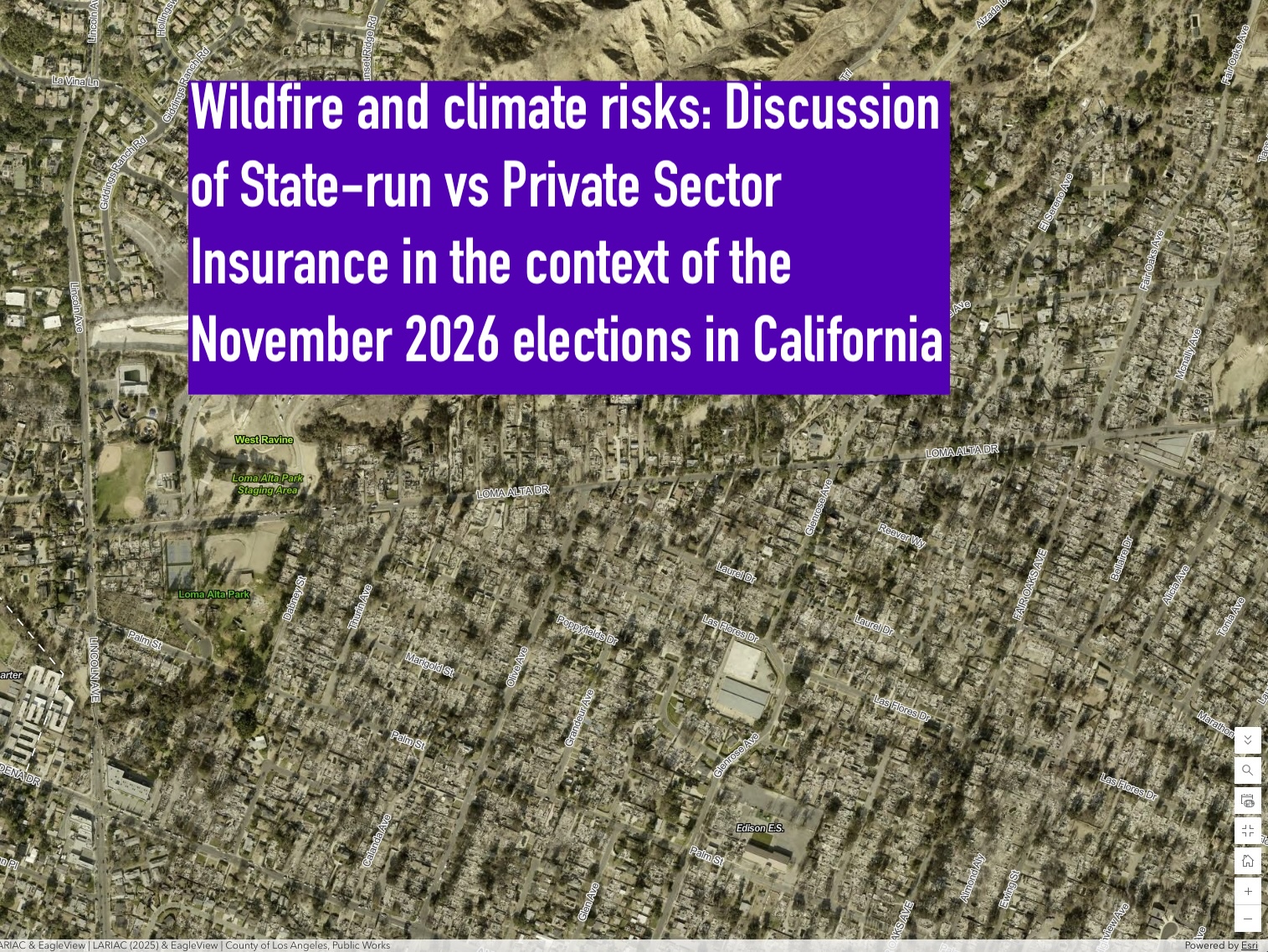
Faced with events of great cost to society, such as heat waves, vegetation fires, floods or earthquakes, cyber risks or riots, not all countries make the same choices. Sometimes the choices vary within a country in relation to different perils. How do we decide when to leave the private insurance sector as the main guarantor of protection (and under what type of supervision) and when to create a state-run mechanism?
Context
This blog is anchored in current events. Californian citizens are called to the polls until November 3, 2026. International attention is focused on the American legislative elections and its possible consequences on the composition of the assembly in Washington and the counterweight that a Democratic majority could bring to the Trump administration. It’s quite natural. However, it is not this aspect of this year's vote that will interest us here. For more context, unlike the French system, there is always a vote in November, every year. In the same ballot, citizens must vote on subjects at the local level (such as the composition of the management of school districts, the uses of the hotel tax at the municipal level, pedestrian zones, etc.), as well as choices at the county level (example: electing the heads of the water service) and proposals and elections at the state level. This year in California, these proposals put to the vote include a one-time 5% tax on taxpayers with assets of more than $1 billion (for health-related expenses) and elections include those for the positions of Governor, Lieutenant Governor, Comptroller, Treasurer….and Insurance Commissioner. It is this last point which motivated this blog.
What is an insurance commissioner?
As the Jefferson Public Radio informs its public, an Insurance Commissioner "leads the Insurance Department, which regulates home, auto, life, health, workers’ comp and other insurance. The commissioner is tasked with making sure policies are available, premiums are affordable, and that insurance companies are delivering on their promises. […] Most insurance commissioners are appointed; California is one of 11 states whose insurance commissioner is elected. […] The commissioner sets policy and implements new rules — many of which affect consumers’ wallets — either through the regulatory process or by working with state lawmakers on legislation.
You might wonder which entity or government body fulfills this role in France. It is the Prudential Supervision and Resolution Authority (ACPR)—an institution integrated into the Banque de France—tasked with overseeing the activities of banks and insurance companies. The term “prudential” refers to rules based on caution and foresight. The ACPR is an administrative authority whose functional independence from the government is guaranteed by law. The chair of the ACPR’s supervisory board is not elected; the position is held by the Governor of the Banque de France (who is appointed by the President of the Republic). This board, which consists of 19 members, includes a representative of the Minister of the Economy—who has the right to speak but not to vote—as well as qualified members appointed by various government ministers. The operational management of the ACPR is handled by the Secretary General, who is appointed by an order from the Minister of the Economy, upon the proposal of the ACPR chair. This structure was chosen to foster comprehensive coordination.
Insurability against wildfire risk at the heart of the debate
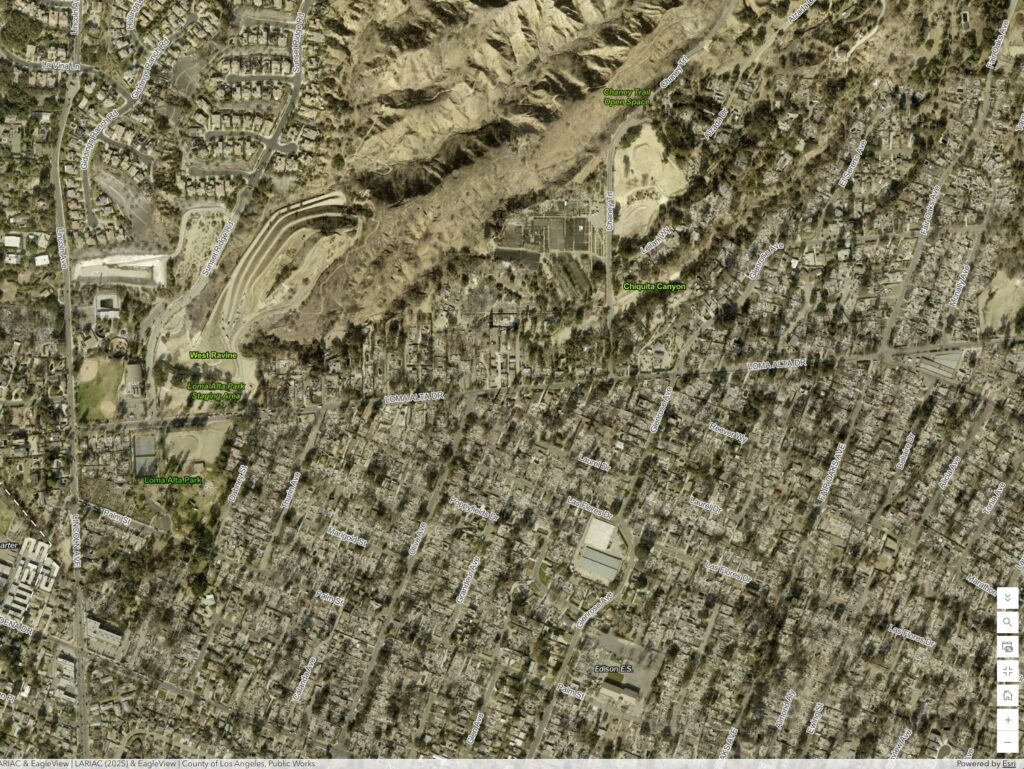
So, here’s the situation: key members of the California state government are elected independently of one another—a group that includes the State Treasurer and the Insurance Commissioner. These two positions are not typically the subject of high-profile, widely publicized elections. This time, however, the elected commissioner will have to confront a crisis in the insurance sector. As of 2025, seven of the 12 largest insurers—representing 85% of the homeowners' insurance market—have either scaled back or paused the issuance of new policies. Premiums have nearly doubled since 2020. Furthermore, in half of all home sales, at least one purchase offer has had to be withdrawn because the buyer was unable to secure insurance. This situation is the result of several years of massive losses caused by the spread of wildfires into populated areas. Among the most severe incidents: the 2017 Tubbs Fire (Napa and Sonoma counties), which resulted in 22 deaths and the destruction of over 5,000 structures (caused by electrical issues); the 2018 Camp Fire (Butte County), with 85 deaths and nearly 18,000 structures destroyed (caused by power lines); and the 2025 Eaton and Palisades fires (Los Angeles County; Fig. 1), which claimed 19 and 12 lives, respectively, and destroyed a combined total of more than 16,000 structures (according to Cal Fire). Thirteen of the 20 most destructive fires in California’s history have occurred since 2017.
The stakes for this election are, therefore, significant. The two candidates facing off in the runoff represent distinctly different visions. One of them, Ben Allen, seeks to bring insurers back, while the other, Jane Kim, proposes removing the “wildfire” risk for insurers by establishing a form of state-backed insurance or reinsurance for this specific fire risk—modeled after France’s Caisse Centrale de Réassurance (CCR), an entity controlled and funded by the ACPR that manages the CatNat (natural disaster) insurance scheme.
Losses due to forest fires: a natural hazard?
Ironically, election campaigns often discuss natural disasters—including wildfires—and frequently invoke the French CatNat (natural disaster insurance) system; yet, in France, forest fires are not actually covered by this framework. It is not that they are excluded due to their high cost; rather, they were simply never included in the first place. Perhaps when the system was established in 1982, fires primarily consumed vegetation rather than homes. The current argument for their exclusion is that they are so rarely natural in origin: between 2010 and 2023, nine out of ten fires were caused by human activity, with lightning being the only natural cause. According to the Observatoire des forêts (Forest Observatory), 70% of human-caused fires stem from economic activities—such as construction work, agricultural operations, or power grid infrastructure—or from everyday human activities. The remaining 30% are the result of malicious acts. Is the situation any different in California? Not really: over the last 30 years in the United States—and specifically in California between 1992 and 2024—more than 85% of fires (and over 67% in California) have been attributed to public utility infrastructure (particularly electrical grids), mechanical failures in vehicles or other equipment, or human carelessness—such as discarded cigarette butts, campfires, or the burning of green waste. Notably, major utility providers PG&E and SoCal Edison have been implicated in fires in Northern and Southern California, respectively, with the resulting civil liability pushing both companies to the brink of bankruptcy. Since 2018, residents in the San Francisco area have come to expect preemptive power shutoffs whenever it gets windy. The State of California had to intervene to prevent utility companies from shutting down, and in 2019, it established the "Wildfire Fund." This fund provides a mechanism for utility companies to recover certain costs and expenses resulting from wildfires that have occurred since July 2019—provided those fires were ignited by one of the participating utility companies (SDG&E, SoCal Edison, or PG&E). This protection is contingent upon the companies committing to invest in improving the safety of their infrastructure and operations, and implementing a wildfire mitigation plan approved by the Office of Energy Infrastructure Safety.
Naturally, both here and there, the severity of these wildfires—in terms of the area burned, the speed at which they spread, the conditions under which they ignite, and the amount of available fuel—has increased due to climate change. However, that alone does not account for the heightened risk; other contributing factors include the growing number of (often wooden) homes built in the wildland-urban interface, an influx of residents unaccustomed to managing such risks, the density of fire stations, and—as previously mentioned—the level of maintenance of the electrical grid.
The role of the State in risk management
Let’s return to the election. Both candidates are committed to better regulating insurers and implementing processes to help accelerate the reduction of structural vulnerability. They aim to make financial protection against fires more widely available and accessible to all households. Where they differ is in their views on the most coherent method to achieve this. Allen wants to persuade every insurer to offer policies—even in areas where urban development meets wildland—by encouraging them to use probabilistic risk models and to factor the cost of reinsurance into their premiums, even if this makes them very expensive. In exchange, insurers would be encouraged to provide incentives for property improvements and would be required to conduct prompt inspections and pay out claims in the event of a disaster. Kim, by contrast, wants to leverage insurance premium funds to finance priority projects on a statewide scale; furthermore, by consolidating these premiums, Kim aims to negotiate better terms for reinsurance and other forms of risk transfer. Under Kim’s plan, premiums would consist of two components. The first, calculated based on the specific risk to a property, would decrease as the property—and the surrounding community—become safer; the goal here is to reward individual and local efforts. The second component would be indexed to the cost of rebuilding the property, with every household in the state contributing to a pool designed to cover severe wildfire seasons—events whose costs no single home, business, or neighborhood could absorb on its own. This represents the risk-pooling aspect. There is another significant point regarding coherence: when insurers collect premiums, the money does not simply sit in a bank account—it is invested. Kim proposes redirecting insurance premiums to invest in community resilience, fire protection, and investment funds or companies focused on climate change mitigation—rather than investing in fossil fuels. Is this truly a new concept?
Insurance and investments in fossil fuels: where do things stand?
It would seem self-evident that an industry providing coverage against climate-related risks should avoid investing in fossil fuels—wouldn’t it? Well, not necessarily. According to a report titled Climate Change for the Insurance Sector—produced by Ceres, ERM, and Persefoni—the U.S. insurance industry held $536 billion in fossil-fuel-related assets in 2019. This is despite the fact that some insurers cite climate-related risks and natural disasters as reasons for rising premiums and/or reduced coverage in certain high-risk regions. While the Environmental, Social, and Governance (ESG) framework—introduced at the United Nations in 2004—had fostered a shift toward greater corporate responsibility among major global firms, the Trump administration turned ESG into a symbol of the American "culture war" (aligned with an "America First" agenda). Beyond withdrawing from the Paris Agreement and the UN Framework Convention on Climate Change, the administration rolled back anti-pollution laws—including those limiting methane and other greenhouse gas emissions—diminished the role of the Environmental Protection Agency (EPA), and invested in coal and other fossil-fuel projects within the United States. Although some U.S. states have maintained their own standards, and companies that also operate in Europe, Canada, or Japan remain subject to those regions' regulations, it is unlikely that these figures have improved significantly since 2019. This is not to mention the massive accumulation of capital currently flowing into data centers. In this context, it is worth noting that the "E" in ESG measures a company’s impact on the natural environment—not the impact of the environment on the company. The "S" evaluates how a company treats its employees, the communities in which it operates, and its customers. Finally, the "G" covers how decisions are made, encompassing transparency, ethics, and management accountability. The decisions companies make regarding whether or not to locate facilities in high-risk areas (prone to hurricanes, floods, or fires)—as well as the implementation of risk-transfer mechanisms (such as insurance, reinsurance, or catastrophe bonds)—are not directly covered here. But I digress; that’s a topic for another post...
Let’s return to France and look beyond the specific risk of “forest” fires toward climate-related risks in general. How are insurance premiums invested by the Caisse Centrale de Réassurance (CCR), the Banque de France, and private French insurers? And what kind of synergy exists between the CCR, the ACPR, and French insurers with regard to climate change (Fig. 2)?
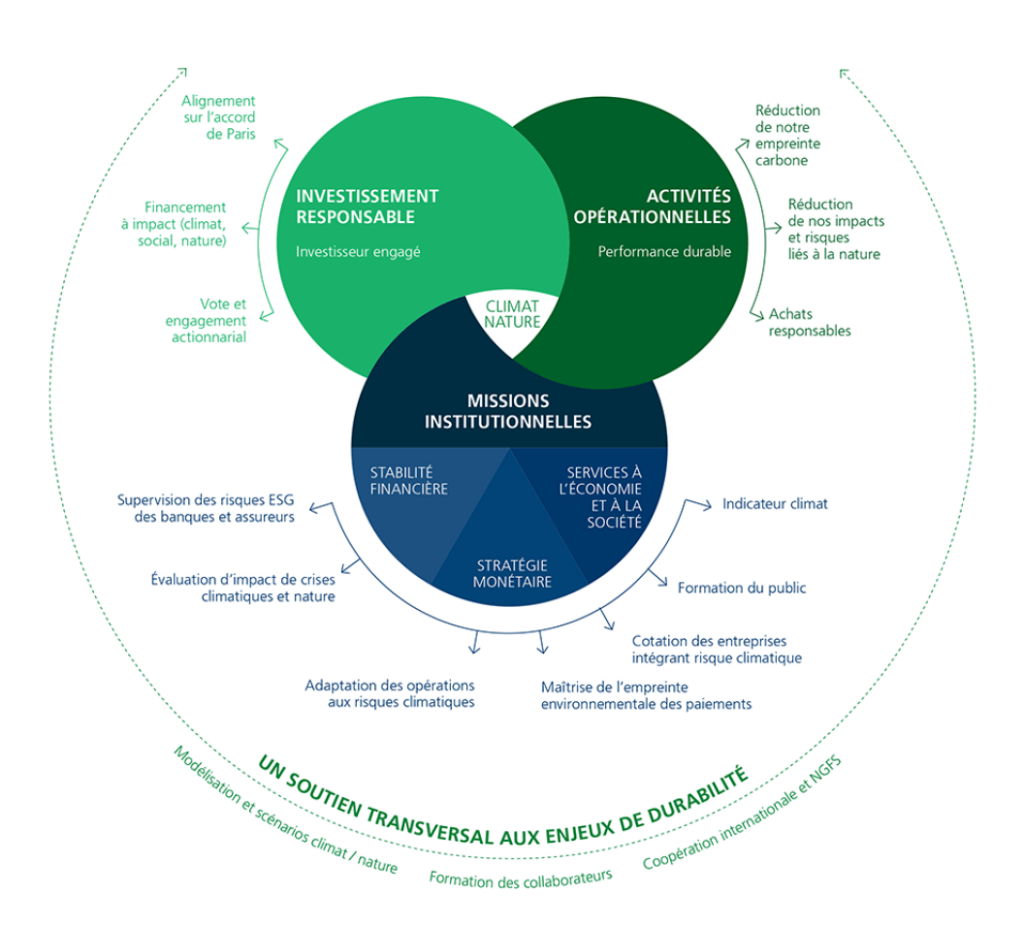
The CCR 2024 Responsible Investment Report indicates that its €10.6 billion portfolio aligns with a temperature trajectory of 2.4°C as of the end of 2024, with the goal of remaining below 2°C by 2100. As of the end of 2024, less than 2% of the portfolio is linked to hydrocarbons and less than 1% to coal, with a complete exit planned by 2030. For its part, as early as 2018—in accordance with its Responsible Investment (RI) charter—the Banque de France began excluding from its portfolios companies that derived more than 20% of their revenue from thermal coal (through extraction or energy production). Seeking to strengthen and broaden these exclusions, the Banque de France updated its RI charter in 2021, with the changes taking effect in 2024. Since the end of 2024, the Banque de France has implemented a total exclusion of the thermal coal sector, having previously lowered its exclusion threshold to 2% of revenue at the end of 2021. In line with the European Commission’s delegated act of July 17, 2020, the Banque de France excludes companies that derive more than 10% of their revenue from oil or more than 50% from gas. Furthermore, it completely excludes companies involved in unconventional hydrocarbons—including shale oil, shale gas, oil sands, and exploration or extraction activities in the Arctic or deep-water environments (with the revenue threshold reduced to 0%, down from the previous 10%). Furthermore, in 2024, the Banque de France further strengthened its commitment to the energy transition by deciding to exclude all companies developing new fossil fuel extraction projects. This requirement, which came into effect during the year, aims to align with the assumptions of the IPCC and the IEA for achieving a global warming trajectory of less than 1.5°C by 2100.
However, their efforts do not stop there. The CCR and the ACPR are collaborating to analyze the resilience of the French financial system to climate change through the modeling of natural disasters and the development of climate stress tests, which are subsequently applied to the insurance sector.
The 2026 report from France Assureurs (Fig. 3) states that only 1.5% of the direct investments made by French insurers are exposed to the oil and gas sector, and that exposure to coal is virtually zero.
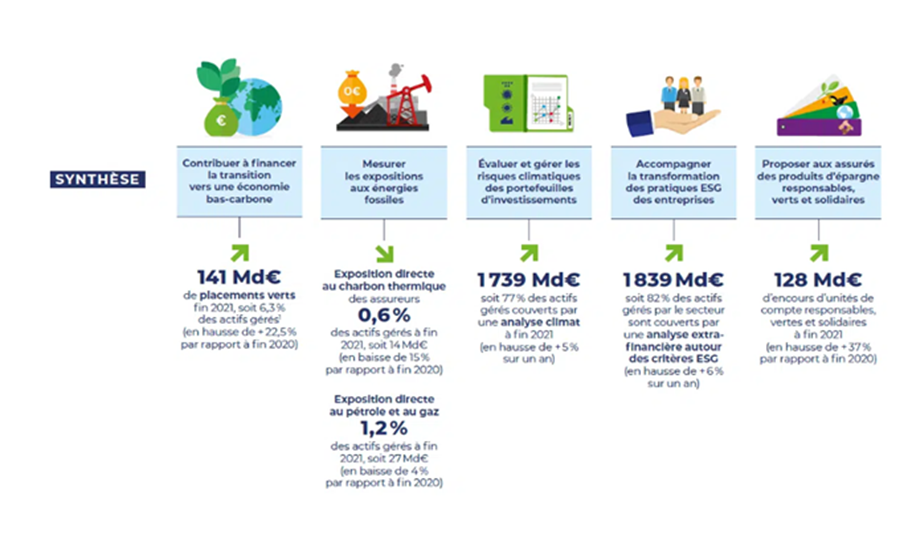
These figures should be qualified by indirect exposure to companies developing new fossil fuel projects, particularly in life insurance or other funds (according to Reclaim Finance).
So, in the end—public or private?
One of my professors used to say: when faced with an "either/or" question, the answer is quite likely to be "both" or "it depends." I do not claim to provide an answer here. Instead, I thought it would be interesting to contrast two options currently under consideration in California with a "model" that one of the candidates—if elected—hopes to emulate: the French CatNat (natural disaster insurance) system, managed by the CCR.
The French system is representative: citizens are not directly asked to vote on such matters. While they are involved locally in projects of public interest—such as infrastructure or energy initiatives, like the current HyFen project—they do not, for the time being, have a say in the direction or choices of the institutions that oversee the banking and insurance sectors. These institutions operate with functional independence from the government and within a European legislative framework that currently strongly favors an energy transition away from fossil fuels. In contrast, Californians are called to the polls annually to weigh in on both local and state-level propositions; furthermore, their state is part of a federation that, at present, prioritizes fossil fuel production and short-term profit.
In both places, whenever a state-led program is proposed to manage local risks, citizens who do not feel directly affected often express concern—fearing that they will end up paying for "others." I would like to highlight two points here. First, the concept of "pooling" risks is also used in the private sector, where it is known as diversification. Simply put, it involves covering—within a single program—risks that are unlikely to occur simultaneously. And yes, when an event does occur, the premiums paid by some are used to compensate others. That is the very principle of insurance. Within a single state, fires and floods can collectively affect nearly all homes—though not necessarily at the same time. Even for a single type of hazard, the correlation of risk across different regions is a subject of study rather than a guaranteed certainty. For instance, the Santa Ana winds that elevate risk around Los Angeles do not occur in Northern California; similarly, the specific sequence of rainfall and heat that leads to a high volume of fire-prone vegetation near Mount Shasta is unlikely to be the same as that seen around San Diego. The primary distinction between risk pooling (mutualization) and diversification lies in who controls the allocation of funds. Furthermore, our world is changing—due to shifts in climate, the placement of homes, and population movements. We are seeing greater urban density, with residents who lack any memory of past fires and possess no tradition or practice regarding vegetation management—all within an increasingly extreme climate. The fire in Fontainebleau, France, this past July clearly demonstrated that the attitude of "it could never happen here" is no longer a defensible position.
Regardless of the system adopted, it is urgent to learn as much as possible about the vulnerability of buildings in order to update building codes in wildland-urban interface areas. In this regard, standardized inspections—accessible to scientists and engineers (similar to those provided by the French Association for Earthquake Engineering, AFPS, in the wake of seismic events)—are essential. Such analyses also make it possible to evaluate the impact of risk-reduction measures and reflect these in insurance premiums. While these analyses already exist in the form of models, their empirical validation requires data sharing—a process that can become complex when a large number of insurers are involved, sometimes with multiple insurers covering a single property. Finally, one challenging element will remain to be managed: the evolution of zoning. An insurable risk must be quantifiable and must remain fortuitous; otherwise, it is merely an operating cost, not insurance.
Planning practices—such as decision-making regarding the relocation or withdrawal of inhabited areas deemed too high-risk, understanding population migration toward vulnerable zones, and determining risk tolerance—will continue to require research not only in scientific, demographic, and economic fields, but also in sociology and psychology. To be effective and empowering, zoning, building codes, lending criteria, and insurability conditions must be aligned—a delicate balance that is notoriously difficult to achieve when there are tensions between stakeholders, conflicts between immediate gratification and long-term sustainability, or simply varying levels of maturity across different sectors, even when they share the same long-term goals.
This is not a task for the "public or private" sector alone; it involves the public sector, the private sector, and all members of society—citizens, businesses, dreamers, artists, children, young people, older adults, and retirees. The key is to recognize that this process is already underway and that everyone can contribute—whether at the ballot box, through their professional work, or in their daily lives.
References
https://www.ijpr.org/politics-government/2026-09-10/what-californias-insurance-commissioner-does-and-how-it-affects-your-wallet)
https://www.fire.ca.gov/-/media/calfire-website/our-impact/fire-statistics/top-20-destructive-ca-wildfires.pdf
https://observatoire.foret.gouv.fr/themes/les-causes-des-incendies-de-foret-et-de-vegetation-en-france
https://www.cawildfirefund.com/
https://www.benallenca.com/issues
https://www.janekim.org/policybrief
Changement climatique pour le secteur de l'assurance, réalisé par Ceres, ERM et Persefoni.https://www.ceres.org/download/c465ba9e-8994-48b8-8188-f007a9ed8591
CCR 2024 Responsible Investment Report
https://www.banque-france.fr/fr/publications-et-statistiques/publications/rapport-durabilite-2025-laction-durable-de-la-banque-de-france-et-de-lacpr
https://www.banque-france.fr/fr/publications-et-statistiques/publications/les-banques-face-aux-risques-climat-et-nature-des-exigences-renforcees
https://reclaimfinance.org/site/2026/02/05/dereglement-climatique-lassurance-vie-toujours-au-service-de-lexpansion-des-energies-fossiles/
https://www.legifrance.gouv.fr/jorf/id/JORFTEXT000052067192
Czajkowski, J., Young, M., Giammanco, I., Nielsen, M., Russo, E., Cope, A., Brandenburg, A., Groshong, L. (2020). Application of Wildfire Mitigation to Insured Property Exposure. CIPR Research Report.https://content.naic.org/sites/default/files/cipr_report_wildfire_mitigation.pdf
0 Comments